Which Antarctica Itinerary is Right for You
Antarctica is not a destination to plan last minute. There's no train system, no last-minute flights between cities, and no way to "wing it" once you're there. Every trip is a ship-based expedition, booked months in advance, and the differences between itineraries can mean the difference between a good trip and the trip of a lifetime. Here's how to think through the decision.
More Money Really Does Mean More Value Here
Choosing an Antarctica itinerary comes down to a blunt truth: this is one of the rare trips where spending more actually buys you more, not just fancier trimmings. Every extra day and every extra dollar generally translates into more zodiac landings, more hours among penguin colonies, more chances for the weather to cooperate and let you off the ship.
The size and type of ship shapes the trip as much as the route does. Antarctic tourism guidelines only allow ships carrying 500 or fewer passengers to make landings at all, and only 100 passengers ashore at at a time. Ship size directly caps how much time you personally spend on land. Additionally, Category II ships under IAATO's classification can only access about 60% of landing sites compared to Category I ships. This impacts you most on bad weather days.
Before comparing prices, work through three questions: How much time can you actually take off? Are you chasing a specific wildlife bucket-list item? And what's your travel style?
How Much Time Do You Have?
The classic entry point is the 10 to 11-day round trip out of Ushuaia, Argentina, roughly two days crossing the Drake Passage each way, bookended around four or five days actually exploring the Antarctic Peninsula. It's the shortest, most affordable way to say you've been to Antarctica, and for many travelers it's more than enough.
But if you have the time and budget, the itineraries stretch out fast. Longer itineraries offer a unique opportunity to see more wildlife. In fact, I saw the most animals while visiting the Falkland Islands and South Georgia. If your schedule and budget can stretch, the longer itinerary is almost always the better trip, not just a bigger one.
South Georgia or Emperor Penguins?
This is the fork in the road that trips up a lot of first-time planners, because the two are mutually exclusive on a single voyage.
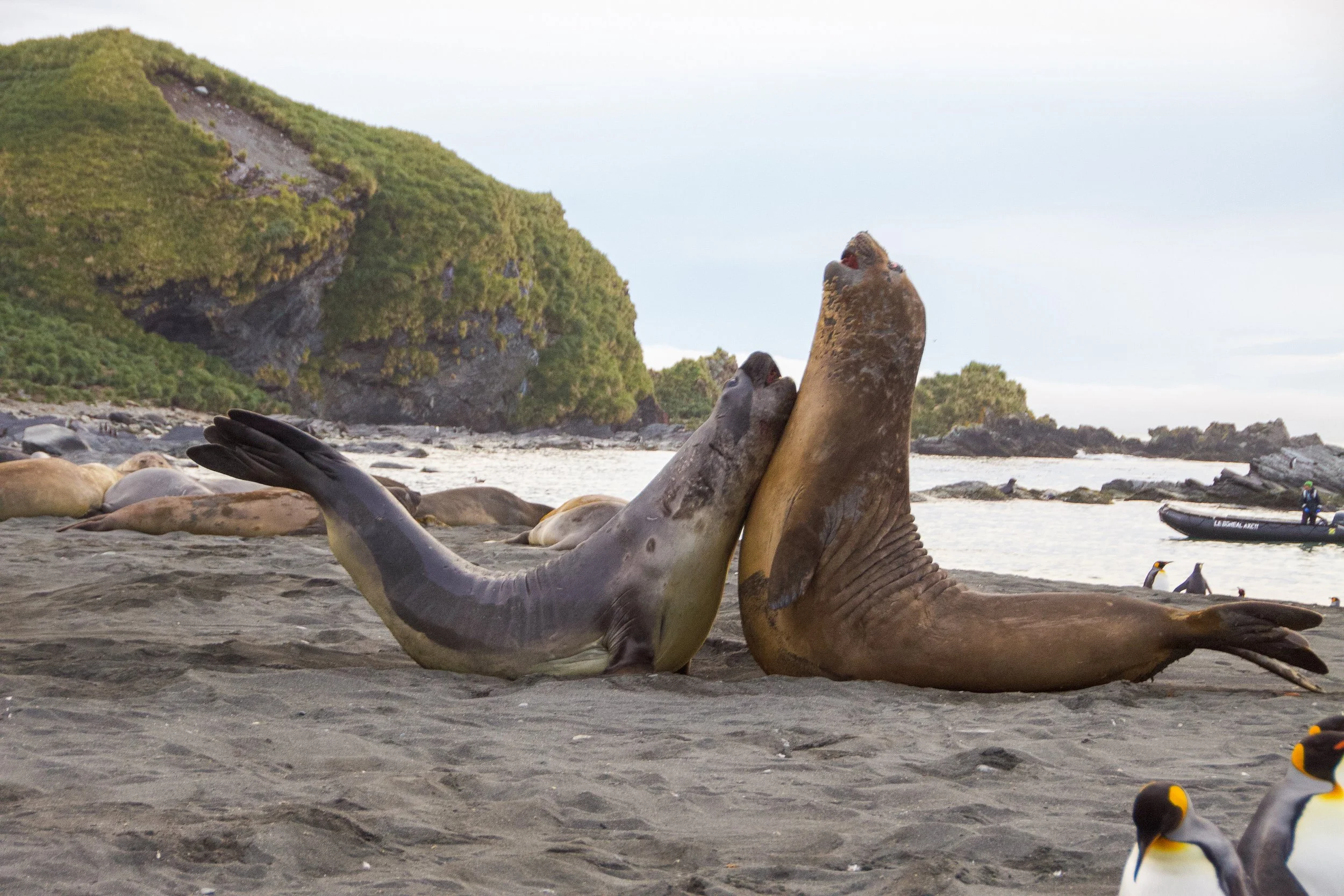
South Georgia Island is often called the wildlife capital of the Southern Ocean because it is home to hundreds of thousands of king penguins, massive elephant seal colonies, and albatross nesting grounds, plus the historical pull of Ernest Shackleton's grave in Grytviken. It's part of the longer Falklands–South Georgia–Antarctica itineraries described above.
Emperor penguins are a different itinerary entirely. They breed far from the routes any standard peninsula cruise can reach, so seeing them requires a helicopter. These trips run in a narrower season, cost significantly more, and involve real weather and logistics risk. If emperor penguins are your must-see, they dictate the entire itinerary from the start. And there is only one supplier I recommend to my clients for their 100% success rate of seeing emperor penguins.
What's Your Travel Style?
Once you know how much time you have and which wildlife you're chasing, the last decision is what kind of experience you want between landings: who's guiding you, what you come back to on board, and how the atmosphere feels.
Old-school luxury. Think butler service, wine cellars, multi-course dining, and spacious suites.
Unpretentious luxury. Comfortable, well-appointed ships that never try to be a resort. The emphasis stays on the place, not the ship, and are typically build around science.
Rugged. For travelers who want the expedition to feel like an expedition with kayaking, camping on the ice, mountaineering, polar plunges, even submarines or helicopters depending on the ship.
By letting me know which version of Antarctica you're picturing, I can pair you with the right ship and itinerary.